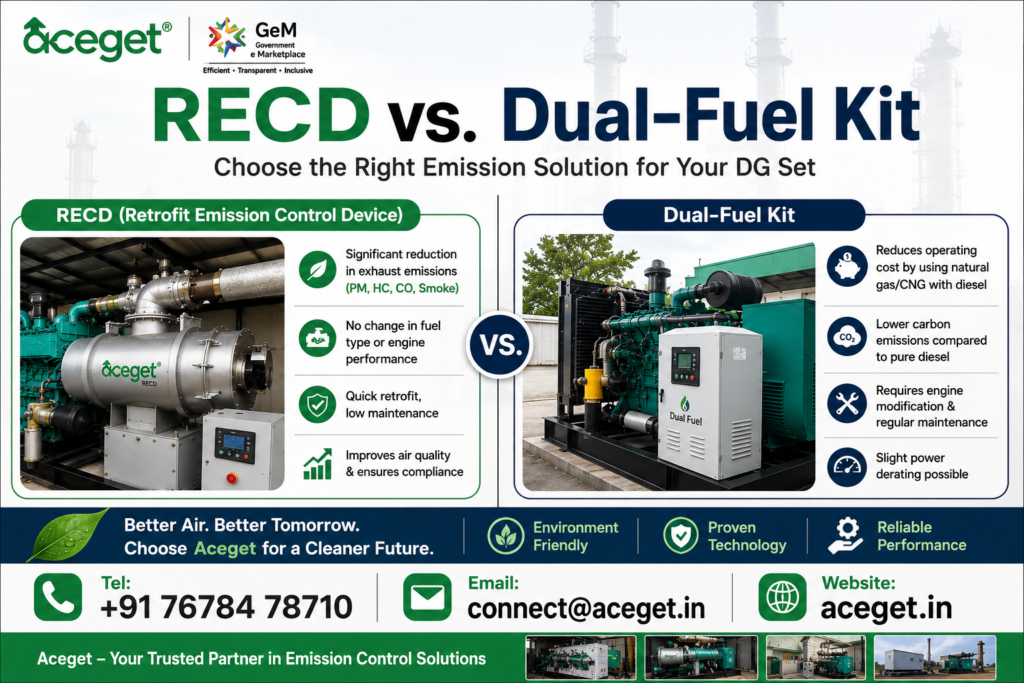
Diesel generators remain the backbone of emergency backup power across commercial hubs, residential complexes, hospitals, and manufacturing plants. However, tightening pollution norms mean operating an unmodified engine is becoming a serious operational and legal risk. Facility managers facing impending enforcement action often weigh two primary options: retrofitting with a RECD Diesel Generator system or converting to dual-fuel operation. This guide evaluates both solutions so you can make a confident, future-proof decision for your power setup.
Table of Contents
Why Are Diesel Generators Facing Pollution Rules?
Unmodified diesel engines release high concentrations of noxious exhaust gases and particulate matter (PM) directly into the environment. In densely populated urban areas, these emissions drastically lower local air quality and exacerbate public health issues. In response, environmental regulatory bodies are actively monitoring backup power systems, mandating retrofits, and imposing heavy fines or immediate shutdown orders on non-compliant facilities.
What Is a RECD Diesel Generator Solution?
A RECD Diesel Generator is an advanced filtration exhaust unit retrofitted onto an existing diesel engine. Instead of replacing an expensive generator outright, an RECD traps toxic exhaust pollutants right at the tailpipe. It neutralizes heavy soot particles and dangerous gases before release, allowing your current equipment to satisfy stringent environmental standards without compromising engine output or reliability.
What Is a Dual-Fuel Kit?
A Dual-Fuel Kit modifies an engine intake system so the RECD Diesel Generator burns a mixture of diesel and natural gas or CNG simultaneously. Substituting gas for a large portion of diesel lowers overall operating fuel costs during long power outages. While burning gas produces slightly less carbon output than pure diesel, dual-fuel technology is primarily designed for financial savings rather than thorough exhaust purification.
RECD vs. Dual-Fuel Kit – Key Differences
While both upgrades enhance generator performance, they address fundamentally different operational challenges.
| Feature | RECD Solution | Dual-Fuel Kit |
| Primary Purpose | Exhaust purification & regulatory compliance | Fuel cost reduction |
| Pollution Impact | High reduction in PM, CO, and unburned hydrocarbons | Minor reduction in soot and carbon |
| Compliance Level | Specifically engineered to satisfy strict air norms | Primarily an operational efficiency upgrade |
| Installation Scope | Exhaust system retrofit | Engine intake and gas piping integration |
Which Solution Can Help Prevent Generator Restrictions?
If your primary goal is achieving full emission compliance to avoid municipal sealings or bans, an RECD is the definitive choice. Air quality inspectors focus directly on tailpipe particulate density—a metric where dual-fuel conversions alone frequently fail to pass. While dual-fuel systems reduce overall diesel consumption, dedicated exhaust filters are required to meet modern emission caps reliably.
Who Should Choose an RECD Diesel Generator?
RECD retrofits are ideal for organizations where uninterrupted power and environmental compliance are non-negotiable:
- Hospitals and Healthcare Centers: Guarantees clean air around critical patient care areas.
- Residential Societies and Hotels: Eliminates heavy soot and toxic odors near living spaces.
- Data Centers and Corporate Offices: Prevents regulatory shut-down notices while keeping uptime intact.
- Factories and Construction Sites: Protects worker safety and aligns with corporate ESG goals.
Why Many Businesses Trust Aceget for RECD Solutions
Reliable emission control requires proven technology and expert support. Businesses partner with Aceget for high-efficiency RECD Diesel Generator systems engineered for various generator capacities. From pre-installation site surveys to technical guidance and ongoing maintenance, Aceget ensures your backup infrastructure remains fully compliant without disrupting day-to-day operations.
Tips Before Choosing the Right Solution
- Check Local Mandates: Verify exact regional emission cut-off limits before investing.
- Evaluate Generator Health: Inspect your engine’s current age, load capacity, and service history.
- Prioritize Compliance Over Savings: Fuel savings won’t help if your facility faces an operational ban.
- Partner with Certified Experts: Work with experienced vendors providing complete installation and warranty coverage.
Conclusion
Both technologies offer clear operational benefits, but their core objectives differ completely. Dual-fuel kits excel at trimming long-term fuel expenses, whereas a RECD Diesel Generator safeguards your facility against regulatory bans while protecting ambient air quality. For lasting compliance and complete peace of mind, an emission control retrofit remains the most dependable choice.
FAQs
Does an RECD Diesel Generator reduce harmful emissions?
Yes, it traps soot, fine particulate matter, and harmful gases before exhaust escapes into the air.
Is a Dual-Fuel Kit the same as an RECD?
No. Dual-fuel kits blend gas with diesel to lower fuel costs, while RECDs specifically purify exhaust emissions.
Which option is better for meeting pollution rules?
An RECD is explicitly engineered to meet strict government emission standards and pass environmental inspections.
Can Aceget help select the right RECD solution?
Yes, Aceget evaluates generator specifications to recommend and install the exact RECD capacity required.
