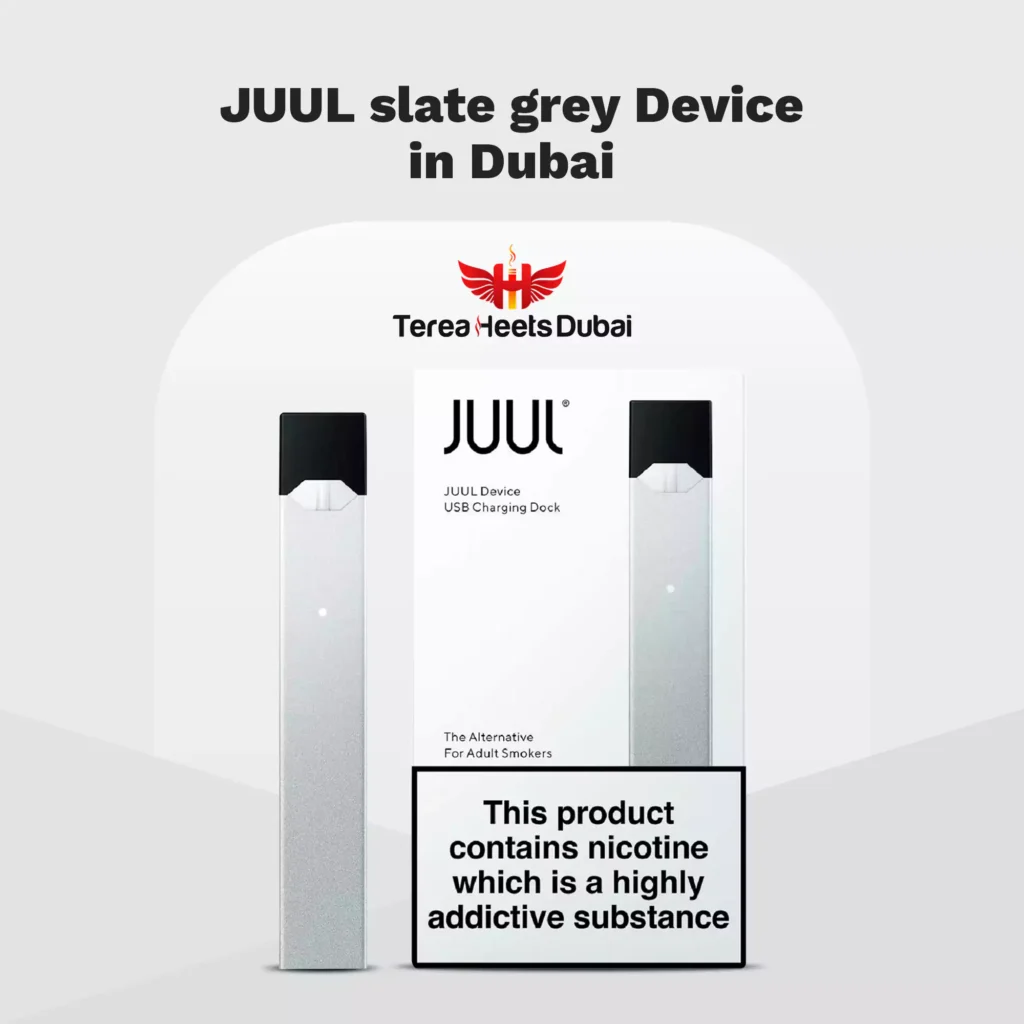
The JUUL Slate Device is still visible in the UAE in 2026, but the evidence supports a story of continued legacy demand, not a broad comeback. For adult buyers, the practical issue is simple: can you still find the device and compatible pods through UAE sellers that clearly present age-restricted nicotine products alongside current alternatives such as al fakher dubai?
Table of Contents
This market read is based on a defined observation window, not vague category chatter. I reviewed UAE-facing listings and delivery pages between 10 January and 24 February 2026 across specialist vape retailers and major local marketplaces that publicly displayed nicotine-device catalogues during that period, including PodsVibe, Vape Monkey UAE, My Vapery, Ecigua UAE, and marketplace sellers visible on Noon and Amazon UAE. Within that sample, the juul limited edition slate and related JUUL hardware remained intermittently listed, but usually as part of a legacy closed-pod range rather than a prominently pushed new release.
One regulatory point needs to be clear up front. In the UAE, nicotine products are adult-only consumer goods, and any discussion of availability has to be framed around lawful sale through locally operating sellers, not informal resale. Here, “compliant” means the seller is openly age-gating or age-restricting the category, presenting products as nicotine items rather than disguised lifestyle goods, and selling within the UAE’s regulated e-cigarette market rather than through anonymous social resale.
That distinction matters because the article’s angle is timeliness, not nostalgia. The timely development in 2026 is not that JUUL Slate suddenly dominates the pod category. It is that some retailers still maintain visible support for this older closed-pod format while the broader UAE market shifts toward newer pod families, stronger local replenishment cycles, and adjacent heated tobacco options.
The Current State of the Market
Across the January to February 2026 observation window, the JUUL Slate Device showed up as available but not central. In the retailer sample, JUUL hardware appeared on specialist nicotine-device sites more often than on general marketplaces, and where it did appear, it was usually grouped with recognised pod brands rather than featured in front-page promotional blocks. That is a classic legacy-product pattern. The device is still in the shop, but it is not setting the pace of the category. Shoppers still searching for juul limited edition slate are usually looking at exactly this kind of legacy listing.
The useful signal was not simply whether a product page existed. Many old nicotine products linger in catalogues long after active support weakens. More telling were dated stock markers, active add-to-cart functions, delivery promises inside the UAE, and separate visibility for compatible pods rather than hardware-only pages. In this sample, some sellers maintained clear product pages for JUUL devices or pods, while others showed thinner catalogue traces or marketplace-style listings with less context. That unevenness suggests continuing circulation, not a fully revived ecosystem.
There is also a presentation gap between specialist retailers and marketplaces. Specialist stores tended to explain compatibility, device type, and category placement more clearly. Marketplace listings, where visible, were more likely to feel transactional and less useful for a buyer trying to judge long-term support. For a closed-pod system, that difference is not cosmetic. It affects whether the buyer can tell if the device is still practically viable or merely technically listed.
So the current state of the market is fairly specific. JUUL Slate is not absent. It is not impossible to buy. But it sits in a narrower lane than newer pod hardware that benefits from heavier UAE merchandising, broader flavour-line visibility, or more aggressive restocking signals. The market story is persistence, not resurgence.
What’s Driving Demand
The evidence does not justify claiming rising mass popularity. What it does support is continued intent-driven demand from adults who already know what JUUL is and are searching for a familiar format. In the reviewed listings, JUUL’s presence looked less like discovery merchandising and more like supply maintained for shoppers who arrive with the brand in mind.
Three product traits still explain that demand. First is simplicity. A slim closed-pod device appeals to adults who do not want refill bottles, coils, or menu settings. Second is familiarity of use. Buyers replacing known hardware often prefer staying within a system they already understand, especially if they value a pocketable device and straightforward operation. Third is recognisable design. The Slate finish still gives the device a cleaner identity than the many generic bar-shaped products now crowding the market.
What is new in 2026 is the context around that demand. Closed-pod competition is stronger, and UAE shoppers now see more alternatives that promise easy replenishment, more visible local stock rotation, and broader shelf energy. That means JUUL demand, where it exists, has become more selective. The buyer is less likely to be browsing casually and more likely to be checking a known product against current pod support.
During the observation window, a repeated market clue was the pairing of JUUL listings with neighbouring categories that now carry more retail momentum. That does not kill JUUL demand, but it changes its character. The product is sustained by familiarity and known-format preference, not by category novelty. For a market-insight piece, that is a meaningful distinction. It explains why the device remains relevant in 2026 without overstating the trend into a comeback story that the visible retail evidence does not support.
Popularity Across the Emirates
The available evidence does not support bold claims that one emirate has embraced JUUL Slate while another has moved on. What can be observed is a difference in retail visibility and delivery coverage, especially between the major urban centres and the Northern Emirates. In the January to February 2026 sample, Dubai-based specialist retailers generally offered the clearest same-day or fast local delivery language, broader pod-category merchandising, and more complete nicotine-device navigation overall.
Abu Dhabi-facing access was also visible, though often through UAE-wide online delivery rather than a clearly separate Abu Dhabi merchandising strategy. Some sellers explicitly listed delivery to Abu Dhabi and other emirates from central fulfilment, which means availability there may be less about local shelf culture and more about whether the retailer treats the product as active warehouse stock.
Sharjah and Ajman were often covered through broader UAE delivery zones rather than distinct local stock pages. In practical terms, that means an adult buyer in those emirates may see the same JUUL page as a Dubai buyer, but with different delivery timing. For Ras Al Khaimah, Fujairah, Umm Al Quwain, and parts of Al Ain, the sample showed less product-specific local merchandising and more dependence on national ecommerce fulfilment language. That is a delivery distinction, not proof of lower user interest.
So the clean conclusion is narrow but useful. The current evidence supports comparing availability infrastructure across emirates, not consumer preference by emirate. Dubai has the strongest visible specialist retail layer. Abu Dhabi remains well served through major UAE sellers. The rest of the country appears more reliant on centralised online distribution. For a legacy closed-pod device, that logistics pattern matters more than speculative regional taste narratives.
Who’s Adopting It and Why
Without retailer interviews or disclosed UAE sales data, it would be sloppy to claim a definitive JUUL Slate buyer profile. The most responsible approach is to infer likely use cases from the product’s characteristics and from how it is merchandised in 2026. Those inferences point to existing adult nicotine users, not first-time experimenters, and to buyers replacing a known device rather than entering the category cold.
The most plausible adopter is someone who values low-maintenance hardware. A closed-pod format still suits adults who do not want refill routines, spare parts, or feature-heavy devices. In practice, that can include commuters, office workers, or travellers inside the UAE, but those are functional scenarios, not verified demographic segments. What matters is the preference for compactness and predictability.
A second likely use case is brand continuity. Some adults simply prefer sticking with a device family they have already used. That matters more with nicotine hardware than many trend articles admit. Once a user is comfortable with a draw style, charging habit, and pod routine, switching systems can feel like extra friction. If JUUL remains visible and compatible pods remain obtainable, that continuity alone can sustain a smaller but stable demand base.
Who is less likely to adopt it is easier to state confidently. Adults who want adjustable airflow, high puff output, refill flexibility, or wide experimentation across pod formats will usually find stronger reasons to choose newer systems. That is why JUUL Slate’s relevance in 2026 is narrow but real. It serves adults who want a familiar closed setup, not shoppers chasing the broadest feature set in the current UAE nicotine market.
What the Trend Signals
The trend signals a mature UAE category where legacy brand recognition still has value, but only if the retail basics hold. A few years earlier, simple name recognition could keep an older device visible for longer. In 2026, visible support has to be more concrete. Buyers can compare listings quickly, spot thin catalogue pages, and judge whether a product is actively sold or merely still searchable.
It also signals a sharper distinction between catalogue presence and market vitality. Plenty of nicotine products can remain technically listed online. Far fewer maintain meaningful support through pods, replenishment clarity, and consistent UAE delivery coverage. JUUL Slate is useful precisely because it shows how a known device can retain shelf relevance without leading the market.
There is a regulatory signal too. In the UAE, “authorised” should not be used loosely as a marketing flourish. In this context, the safer standard is whether the seller is operating openly in the UAE’s regulated e-cigarette category, enforcing adult-only sales practice, and presenting nicotine products transparently rather than through informal channels. That is the practical compliance screen a buyer can actually apply from a storefront or listing page.
For retailers, this trend says something about the value of disciplined niche support. If an older closed-pod device still has a loyal base, the difference between a credible product line and a dead listing often comes down to clear compatibility notes, current stock signals, and honest category placement. For readers, the bigger signal is that 2026 rewards scrutiny. Legacy demand survives where distribution remains legible.
Looking Ahead to 2026
Since this article is set in 2026, the meaningful forecast period is the remainder of the year, roughly March through December, using the January to February observation window as the baseline. Based on that baseline, the most likely path is continued niche availability rather than expansion into a major UAE growth story.
The first indicator to watch is retailer count. If the number of UAE-facing specialist sellers carrying JUUL hardware and clearly matched pods stays steady through mid-year, that would support the case for durable legacy demand. If product pages begin disappearing or remain live without active stock, the market is probably thinning. The second indicator is pod continuity. Closed-pod devices fail quickly once replenishment becomes inconsistent, so pod visibility matters more than one-off hardware listings.
A third indicator is how actively retailers merchandise competing closed-pod systems. If newer devices gain even more front-page placement, promotional banners, and faster delivery promises while JUUL remains buried in long-tail catalogues, that tells you where the category is concentrating. A fourth is delivery geography. If UAE-wide delivery for JUUL products shrinks or becomes slower outside Dubai and Abu Dhabi, the product may remain available on paper while becoming less practical across the country.
That is the real 2026 watchlist. Not hype, and not unsupported claims of a comeback. The JUUL Slate Device remains timely because it shows how an older nicotine product can persist inside a fast-moving UAE market. For adult buyers, the best reading is straightforward: if visible stock, pod support, and UAE delivery coverage remain stable through the year, the device keeps its legacy role. If those indicators fade, so will its practical relevance.
Is JUUL Slate growing again in the UAE?
The reviewed evidence supports continued legacy demand, not a documented broad-based surge.
What should adult buyers check first?
Current pod availability, UAE delivery coverage, and whether the seller clearly presents the product as an age-restricted nicotine item.
Does the evidence support emirate-by-emirate popularity claims?
No. It supports differences in retail visibility and fulfilment coverage, not firm conclusions about local consumer preference.
